New To IVC? Enjoy One $23 Intro Exam!*

A swollen stomach after eating may look like ordinary digestive discomfort, but certain signs should never be ignored. Bloat in large-breed dogs can progress quickly and may become a life-threatening condition called gastric dilatation-volvulus (GDV). With GDV, the stomach becomes enlarged and twists, interfering with blood flow and normal breathing.
Recognizing the warning signs early is especially important for pet parents with deep-chested breeds. If your dog suddenly develops a swollen abdomen, repeatedly tries to vomit without producing anything, becomes restless, or appears weak, seek veterinary attention immediately.
What Does Bloat Look Like in a Large Dog?
One challenge with Bloat in large-breed dogs is that early symptoms can resemble other stomach problems. A dog may initially seem uncomfortable, restless, or unable to settle. As the condition progresses, the signs can become much more serious.
Watch for these warning signs:
- A noticeably enlarged, tight, or swollen abdomen
- Repeated attempts to vomit with little or nothing coming up
- Excessive drooling or salivation
- Pacing, restlessness, or inability to get comfortable
- Panting or rapid, difficult breathing
- Signs of abdominal pain
- Pale gums
- Weakness or difficulty standing
- Sudden collapse
Not every dog will show every symptom. A visibly swollen belly may also be less obvious in some dogs, which is why behavior changes and unsuccessful retching are particularly important warning signs.
Why Is Unproductive Retching Such an Important Warning Sign?
Repeatedly trying to vomit without bringing up food or fluid is one of the classic signs associated with GDV. A dog may gag, retch, or produce only small amounts of saliva or foam.
This should not be treated as routine nausea when it occurs with abdominal swelling, restlessness, pain, or weakness. Veterinary evaluation is needed because an examination alone may not determine whether the stomach has simply expanded or has twisted. Abdominal X-rays are commonly used to help make that distinction.
Which Dogs Have a Higher Risk of Bloat?
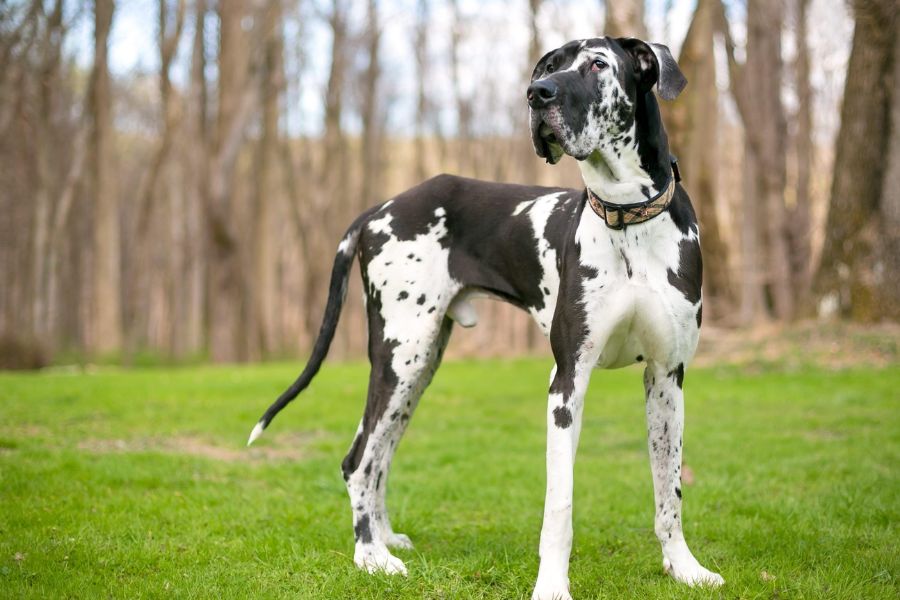
Bloating symptoms in large-breed dogs are particularly associated with dogs that have deep, narrow chests. Breeds reported to have increased risk include Great Danes, German Shepherd Dogs, Saint Bernards, Weimaraners, Irish Setters, Doberman Pinschers, and Standard Poodles. However, GDV can occur in other breeds as well.
Risk may also increase with age, a family history of GDV, rapid eating, large meals, once-daily feeding, and certain behavioral or physical characteristics. No single risk factor can predict whether an individual dog will develop the condition.
Pet parents with an at-risk dog can visit our veterinary hospital to discuss feeding habits, individual risk factors, and whether preventive gastropexy may be worth discussing. Gastropexy attaches the stomach to the abdominal wall to reduce the risk of it twisting, although it does not prevent the stomach from becoming distended.
When Does Suspected Bloat Become an Emergency?
Suspected GDV should be treated as an emergency rather than something to monitor overnight. As the stomach expands and potentially twists, it can compress major blood vessels, reduce circulation, interfere with breathing, and contribute to shock.
Seek immediate veterinary care if your dog has:
- Repeated unsuccessful attempts to vomit
- Rapidly increasing abdominal swelling
- Pale gums
- Difficulty breathing
- Severe weakness
- Collapse
Do not give human medication or attempt to treat suspected GDV at home. If these signs occur, contact a veterinary facility immediately and tell the team that you are concerned about possible bloat or GDV. If your regular clinic cannot provide immediate care, proceed to an emergency veterinary facility.
How Do Veterinarians Evaluate Suspected Bloat?
A veterinarian may begin with a physical examination while assessing breathing, circulation, heart rate, abdominal distention, and signs of shock. Diagnostic imaging, particularly abdominal radiographs, can help determine whether the stomach has twisted. Blood tests and heart monitoring may also be recommended depending on the dog’s condition.
When GDV is confirmed, care generally focuses on stabilizing the dog, relieving pressure in the stomach, supporting circulation, and, when necessary, surgically correcting a twisted stomach. Treatment depends on the individual patient’s condition and the extent of disease progression.
Recognize the Signs and Act Without Delay
Knowing the symptoms of bloat in large-breed dogs can help you recognize when ordinary-looking stomach discomfort may actually require urgent attention. Dry retching, abdominal enlargement, pacing, heavy drooling, breathing difficulty, pale gums, weakness, or collapse should never be ignored.
For pet parents in Charlotte concerned about their dog’s digestive health or individual GDV risk, a routine veterinary evaluation can help identify risk factors and provide guidance on preventive care. If symptoms of suspected GDV are already occurring, however, do not wait for a routine appointment. Seek immediate veterinary attention.
For non-emergency evaluation, preventive discussions, and ongoing care in Charlotte, contact Independence Veterinary Clinic to schedule your dog’s visit. The clinic provides veterinary examinations, digital radiography, laboratory testing, ultrasound, and surgical services that may support the evaluation and management of a range of health concerns.
Frequently Asked Questions(FAQs):
1. Can a dog have bloat without a visibly swollen stomach?
A: Yes. Abdominal enlargement may not always be obvious during the early stages. Repeated dry retching, restlessness, drooling, pain, or weakness can still be concerning and should prompt immediate veterinary advice.
2. How quickly can bloat become dangerous?
A: GDV can progress rapidly. Because it can impair circulation and breathing and lead to shock, suspected cases should be evaluated immediately rather than monitored at home to see whether symptoms improve.
3. Can a dog still drink water if it has bloat?
A: A dog’s willingness or ability to drink does not rule out GDV. If other warning signs are present, offering food or water and waiting for improvement could delay needed care. Contact a veterinarian promptly.
4. Can bloat go away without veterinary treatment?
A: Simple stomach distention and GDV cannot reliably be distinguished at home. Because a twisted stomach is life-threatening, owners should not assume symptoms will resolve without veterinary evaluation.
5. Can bloat be prevented in high-risk dogs?
A: There is no single prevention method that eliminates all risk. Smaller, more frequent meals and management of certain risk factors may be discussed with a veterinarian. Preventive gastropexy may also be considered for dogs at higher risk.
6. Are older dogs more likely to develop bloat?
A: Risk generally increases with age, although younger dogs can also be affected. Breed, chest shape, family history, feeding patterns, and other factors may contribute to an individual dog’s risk.