New To IVC? Enjoy One $23 Intro Exam!*

What Is Catnip, and Why Does It Work?
Catnip (Nepeta cataria) is a perennial herb belonging to the mint family. Native to Europe and parts of Asia, it now grows wild across much of North America. The plant looks unassuming — soft green leaves, modest white flowers — but inside its tissue lies a compound called nepetalactone that does something extraordinary to the feline nervous system.
When a cat sniffs catnip, nepetalactone binds to receptors in the nasal lining and stimulates the olfactory sensory neurons. This triggers a cascade of signals that activate the brain’s reward and pleasure pathways. The result, in about 60–70% of adult cats, is a burst of behavior that looks a lot like euphoria — rolling, rubbing the face and body against the source, vocalizing, drooling, and general silliness. The effect typically lasts between 5 and 15 minutes, after which the cat becomes temporarily immune to it. A refractory period of roughly 30 minutes follows before the same response can be triggered again.
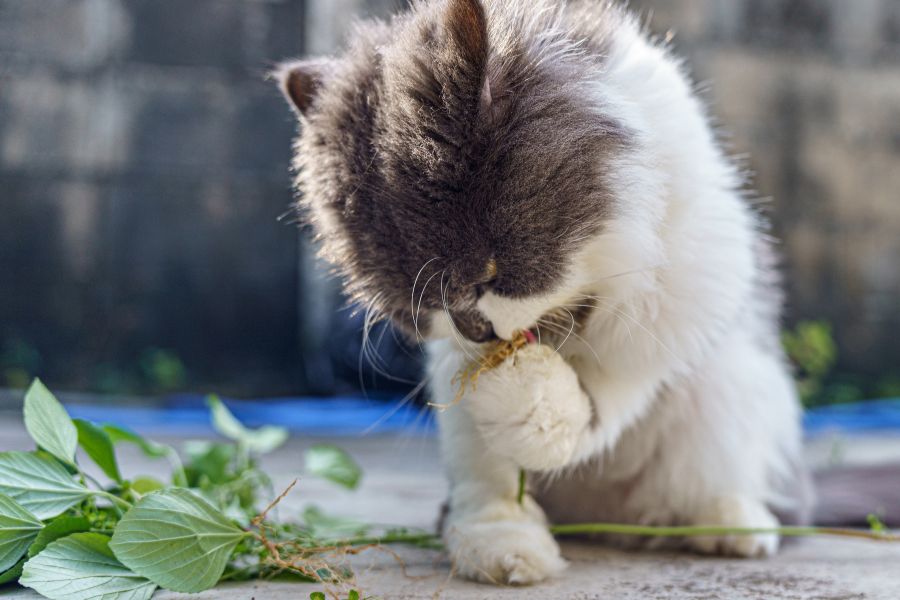
When a cat eats catnip rather than smells it, the response is different — typically calmer, almost sedative. This is thought to happen because the ingested compounds interact differently with the digestive tract than with the olfactory system. Small amounts are perfectly safe to eat, though larger quantities can cause mild stomach upset.
Why Doesn’t My Cat React? (You’re Not Alone)
Here’s something that surprises many cat owners: sensitivity to catnip is genetic, and roughly 30–40% of cats simply don’t have the gene that produces a response. Kittens under 6 months old rarely react to catnip either — the behavioral response doesn’t typically emerge until closer to adolescence, usually between 6 months and a year of age. If you’ve been trying catnip with a young kitten and getting nothing, that’s completely normal.
If your adult cat remains indifferent no matter how you offer it, the good news is that catnip isn’t the only plant in the toolkit.
When Catnip Doesn’t Work: Alternatives Worth Trying
Silvervine (Actinidia polygama) is probably the most important catnip alternative most Western cat owners haven’t heard of. It’s been used in Japan for centuries as a cat stimulant — cats’ reaction to it is affectionately called the “Matatabi Dance” — and research has found it to be even more broadly effective than catnip.
Studies have shown that around 79% of domestic cats respond positively to silvervine, including many cats that show zero reaction to catnip. If your cat is in the non-responsive 30%, silvervine is the first alternative to try.
Tatarian honeysuckle wood is another option, effective in roughly half of cats. It comes in small wooden pieces that cats chew and drool on — less tidy than catnip but oddly satisfying for cats who enjoy it. Valerian root is less predictable, working in about 47–50% of cats, but for those that respond, the stimulant effect can be quite intense. One practical note: valerian has a strong, slightly unpleasant smell to human noses, so be prepared.
It’s worth offering these alternatives systematically rather than all at once — introduce one, observe the reaction over a few days, then move to the next if there’s no interest.
Fresh, Dried, or Spray — Which Form Should You Choose?
Fresh catnip is significantly more potent than the dried variety because the nepetalactone hasn’t had time to volatilize. A small pinch of fresh herb will produce a stronger reaction than a larger amount of dried herb. If you have the space, growing a plant indoors on a sunny windowsill is easy, inexpensive, and gives you a perpetual supply.
Catnip is a hardy, fast-growing herb that tolerates most indoor conditions — treat it roughly like you would a basil plant. Dried catnip is more practical for most households. Keep it in an airtight container away from heat to preserve potency. Loose dried catnip can be sprinkled on a toy, a scratching post, or a small piece of fabric sewn into a pouch.
Catnip sprays are the best choice for cats who tend to get stomach upset from ingesting the plant, since they deliver the olfactory trigger without any consumption. Sprays are also useful for refreshing old toys that have lost their appeal.
Catnip for Anxiety and Stress Relief
Beyond play, catnip has a genuinely useful role in managing feline stress. Cats that become anxious before vet visits, car rides, or home renovations can sometimes be calmed beforehand with a small amount of catnip — the post-euphoria phase tends to leave cats noticeably relaxed. Similarly, cats dealing with separation anxiety may benefit from a catnip-infused toy left out during the owner’s absence to provide brief stimulation and then a calming come-down.
That said, catnip should complement — not replace — proper environmental enrichment, routine, and veterinary care for anxiety. If your cat’s stress is persistent or severe, it’s worth a conversation with your vet about a comprehensive plan. Catnip is a tool, not a treatment.
How Often Is Too Often?
Overexposure to catnip leads to desensitization — the responses become weaker and shorter until eventually the cat doesn’t react at all. To keep catnip effective, limit sessions to two or three times per week at most. Put catnip toys away between uses so they retain novelty. Think of it the way you’d think of a special treat: valuable precisely because it’s not always available.
There’s no evidence that catnip is addictive — cats that have unlimited access simply stop responding to it rather than craving it compulsively.
Safe Use: A Few Practical Guidelines
- Never force catnip on a cat that shows no interest — there’s no benefit, and it causes unnecessary stress
- Avoid highly concentrated catnip oils, which can be overwhelming
- Monitor first-time exposures; occasional cats become overstimulated or briefly aggressive
- If your cat vomits after eating catnip, switch to spray-only application
- Keep catnip away from dogs — it’s non-toxic to them but can cause digestive upset
- Choose organic, additive-free catnip to avoid pesticide residues
Conclusion: Using Catnip Responsibly for a Happier Cat
Catnip is one of the genuinely enjoyable parts of living with a cat — a harmless, cheap, and reliably entertaining ritual when used thoughtfully. Know your cat’s response patterns, keep it occasional enough to stay meaningful, and don’t give up if catnip doesn’t work. There’s almost certainly a plant out there that will make your cat do the Matatabi Dance, too.
Questions about your cat’s behavior or enrichment needs? Reach out to the team — we’re always happy to help
Frequently Asked Questions:
1. What Does Catnip Really Do To Cats?
Ans: Catnip contains a compound called nepetalactone, which affects cats’ behavior when they smell or ingest it. Many cats become playful, energetic, or even a little silly—rolling, rubbing, or chasing imaginary prey. Others may become calm and relaxed. Not all cats respond to catnip, though; sensitivity is inherited, and about 30–40% of cats show little or no reaction.
2. Can I Give My Cat Catnip Every Day?
Ans: Yes, you can safely give your cat catnip daily in small amounts. However, overexposure can make cats less responsive to it over time. To keep it exciting, it’s best to offer catnip a few times a week instead of every day. Always monitor your cat to ensure they don’t overindulge, especially with edible catnip products.
3. Is catnip safe for kittens??
Ans: Catnip is non-toxic to kittens, but most cats under 6 months old simply won’t react to it. There’s no harm in offering it, but don’t be surprised if a young kitten shows no interest at all.
4. My cat eats the catnip rather than sniffing it — is that okay?
Ans: Yes. Eating catnip usually produces a calming effect rather than the energetic response triggered by sniffing. Small amounts are safe; just avoid large quantities, which can cause mild nausea or loose stools.
5. What Are The Side Effects Of Catnip?
Ans: Catnip is generally safe, but too much can lead to mild side effects such as vomiting, diarrhea, or lethargy. Some cats may also become overstimulated and act aggressively if they’ve had too much. To avoid problems, offer catnip in moderation and observe how your cat reacts.
6. What if neither catnip nor silvervine works for my cat?
Ans: Some cats simply aren’t responsive to any of these plants — it’s a genetic trait, and nothing is wrong with them. Focus on other forms of enrichment: puzzle feeders, wand toys, window perches, and interactive play. If your cat seems persistently under-stimulated or anxious, talk to your vet.
7. Can catnip help with vet visit anxiety?
Ans: For cats that respond positively to catnip, offering a small amount 20–30 minutes before a stressful event can take the edge off. The calm that follows the initial euphoric burst can make handling easier. Ask your vet whether it’s appropriate for your cat’s specific situation.